
York County Common Pleas Court
The York County Court of Common Pleas is the general-jurisdiction trial court for the county. York County is Pennsylvania's 19th Judicial District, composed of the Court of Common Pleas and 19 Magisterial District Courts. Common Pleas handles major civil and criminal cases and also covers adoption, divorce, custody, protection from abuse, juvenile delinquency, estates, guardianships, charitable-organization matters, and related filings.
The county court page links local rules, court calendars, jury information, Court Administration, self-help resources, interpreter and language services, the Sheriff's Office, Prothonotary, Clerk of Courts, Clerk of Orphans' Court, and Register of Wills. Those linked offices matter because York County uses split filing offices. Civil and family records are held by the Prothonotary. Criminal records are held by the Clerk of Courts. Probate and marriage records are tied to the Register of Wills and Clerk of Orphans' Court.
The county's Court of Common Pleas page is the main local overview for York County trial-court services.
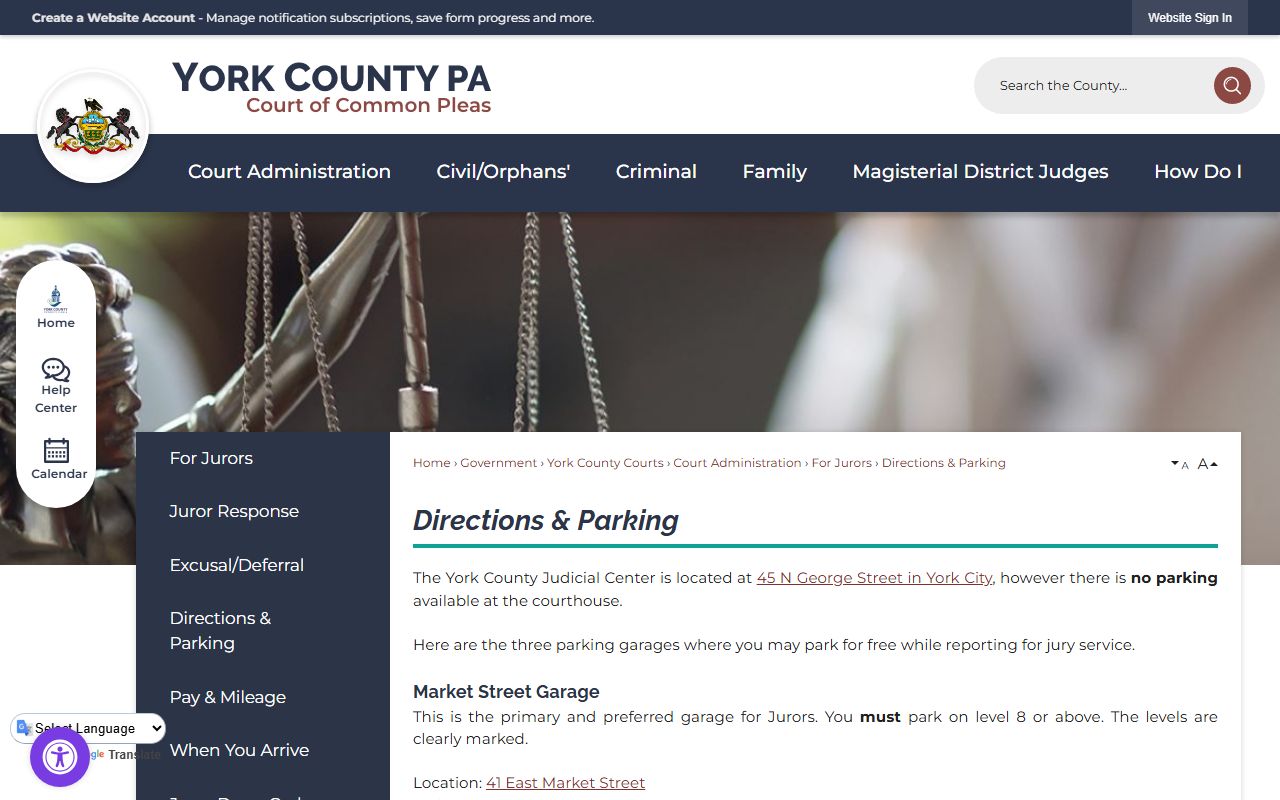
Directions, parking, and court-office links help separate where a person appears from where the record itself is maintained.
York County Judicial Center
The main courthouse for York County Common Pleas is the York County Judicial Center at 45 N George Street, York, PA 17401. The Pennsylvania judiciary lists the court phone as 717-771-9234 and general hours as Monday through Friday, 8 a.m. to 4:30 p.m. The Judicial Center is the main building for Common Pleas filings, criminal court records, civil and family filings, Orphans' Court filings, marriage license appointments, District Attorney contacts, Public Defender contacts, and juror reporting.
York County Judicial Center
45 N George Street
York, PA 17401
717-771-9234
Monday-Friday, 8 a.m.-4:30 p.m.
The county states there is no courthouse parking. Jurors are directed to Market Street Garage at 41 East Market Street, Philadelphia Street Garage at 25 West Philadelphia Street, and King Street Garage at 15 West King Street, with specific upper garage levels listed for juror parking. Visitors pass through the security checkpoint at 45 N George Street. The Orphans' Court page warns that cell phones, pagers, weapons, and cameras are not permitted in the building.
The county's juror arrival page explains entry, security, the fourth-floor jury assembly room, and voir dire.
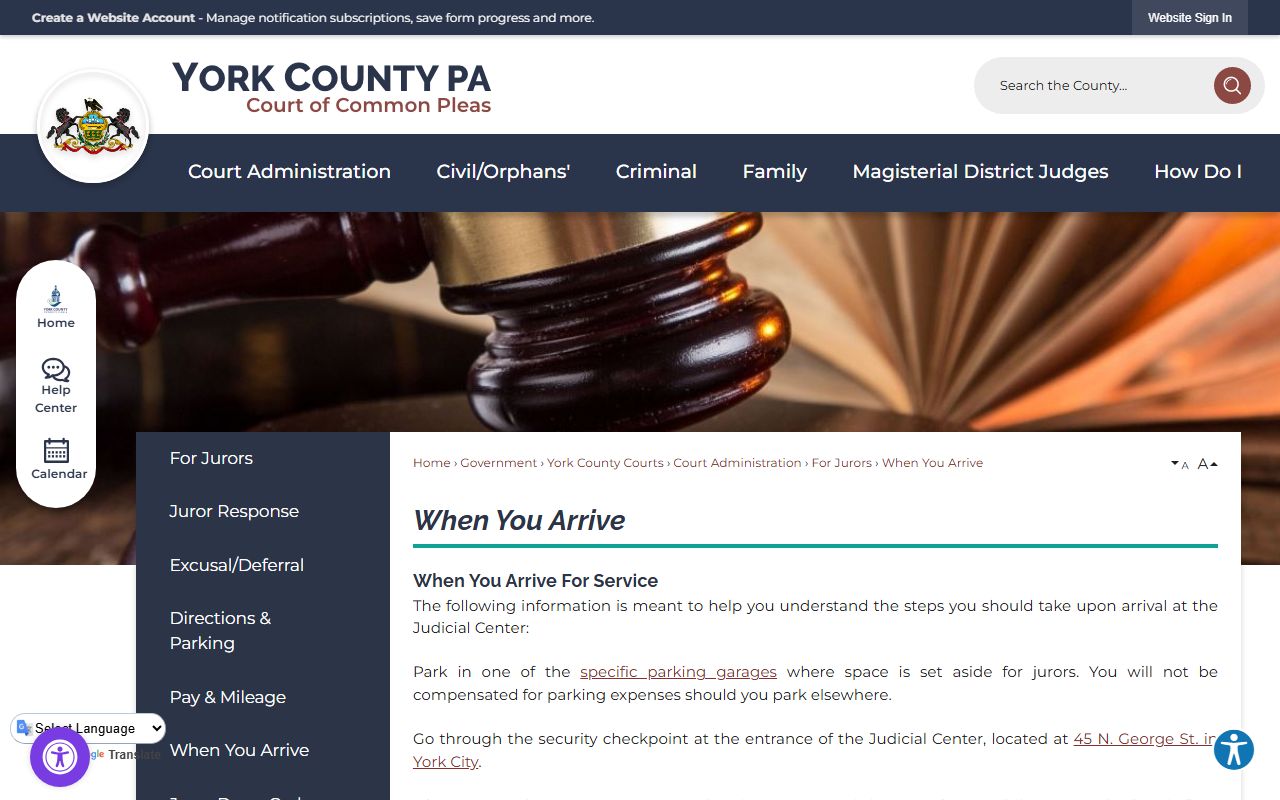
Those details are practical for hearings, jury service, and in-person records work because courthouse entry rules can affect same-day requests.
York County Court Levels
York County court records are easiest to route when the court level is clear. Magisterial District Courts are often the first court for traffic, small civil, landlord-tenant, and preliminary criminal events. The Court of Common Pleas is the trial court for the larger case file, appeals from MDJ decisions, and case types assigned to Common Pleas by Pennsylvania law. Appellate review goes to the correct statewide appellate court based on the case type.
| Court Level | York County Role | Common Record Types |
|---|---|---|
| Magisterial District Courts | Lower courts across York County | Traffic, minor criminal, landlord-tenant, small claims up to $12,000, bail, and preliminary hearings. |
| Court of Common Pleas | 19th Judicial District trial court | Major civil, criminal, family, juvenile, PFA, estate, guardianship, and appeal matters. |
| Superior Court or Commonwealth Court | Statewide intermediate appellate courts | Appeals from Common Pleas depending on subject matter. |
| Supreme Court of Pennsylvania | State court of last resort | Discretionary review and matters within its direct authority. |
York County MDJ Courts
The Magisterial District Judges page confirms that York County has 19 MDJ offices. MDJs are the first level of judicial authority for many residents. They handle all traffic cases, minor criminal matters, civil claims up to $12,000, landlord-tenant disputes, preliminary arraignments, bail, and preliminary hearings before felony and misdemeanor cases move to Common Pleas.
Civil venue in an MDJ case is generally tied to where the cause of action arose, where a transaction or occurrence took place, or where an individual defendant can be served. For entities, venue can depend on where the entity regularly conducts business. The research also notes that complaint filing requires copies: one for the plaintiff, two for each defendant, and one original-signature copy for the MDJ court, with filing and service costs due at filing.
| MDJ Matter | Where It Starts | How It Can Reach Common Pleas |
|---|---|---|
| Traffic citation | Issuing MDJ court | Summary appeal or related warrant/payment issue may involve higher court records. |
| Minor criminal case | MDJ arraignment or preliminary hearing | Held for court on misdemeanor or felony charges into Common Pleas. |
| Small civil claim | MDJ office with proper venue | Appeal from judgment may move to Common Pleas. |
| Landlord-tenant dispute | MDJ office serving the location or parties | Appeal can create a Common Pleas record. |
York County Case Flow
Criminal case flow: arrest or citation › MDJ arraignment or preliminary hearing › Common Pleas information › pretrial events › plea or trial › disposition and sentence. Charges, bail, hearing dates, and outcomes can appear in different parts of the docket as the case moves.
Civil case flow: complaint or petition › service › filings and motions › hearing, conference, trial, or judgment › enforcement, appeal, or closure. Family and PFA matters follow their own rules, and remote access can be limited even when the docket exists.
The county's Adult Probation page documents the post-sentence supervision side for offenders placed on probation or parole by the court.
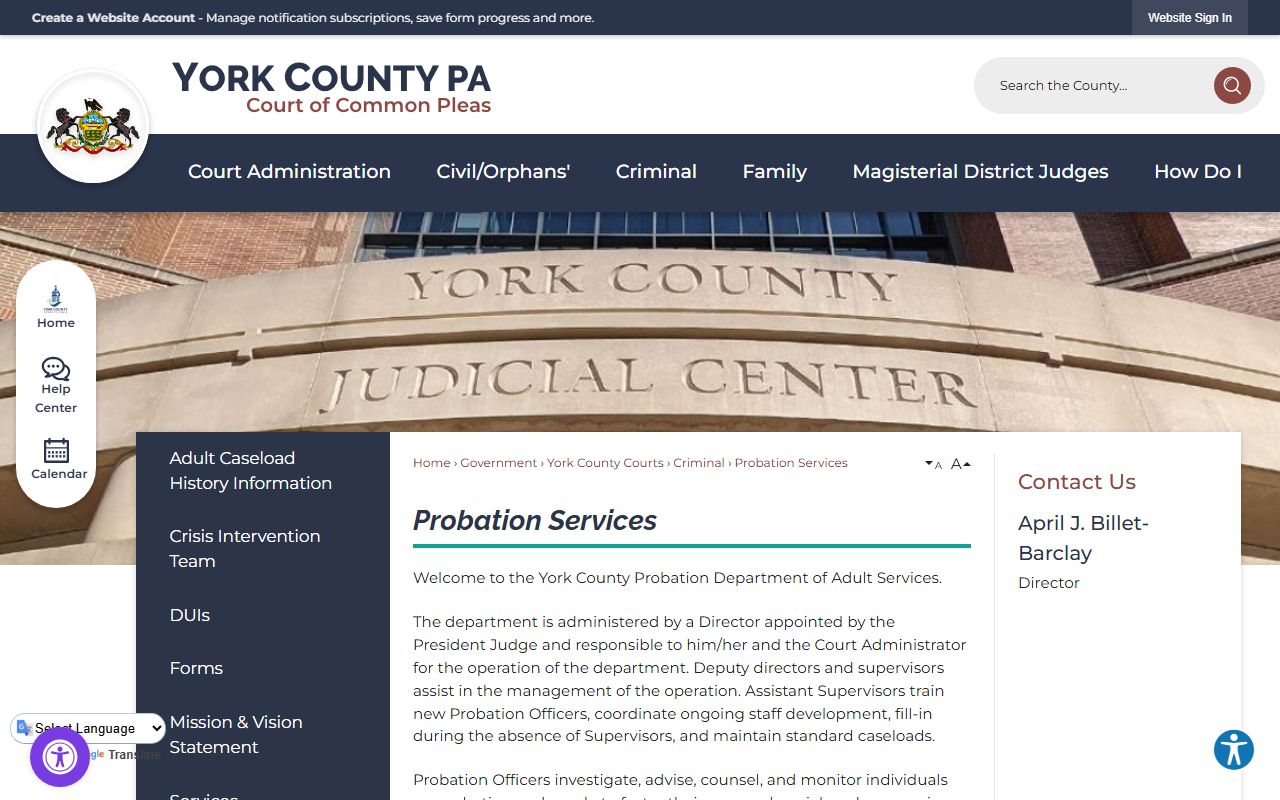
Probation records can affect docket events through violation proceedings, supervision conditions, and returns to court for noncompliance.
York County Court Divisions
Common Pleas work is divided by record type even when the court name is the same. Civil and family filings go through the Prothonotary. Criminal filings, criminal docketing, juvenile criminal-division records, costs, fines, restitution, and expungements go through the Clerk of Courts. Estate, guardianship, adoption, marriage license, and Orphans' Court work involve the Register of Wills and Clerk of Orphans' Court. This split is why a York County Court of Common Pleas search often uses more than one office.
- Civil and family: Prothonotary records, including divorce, custody, civil claims, judgments, liens, and PFA categories.
- Criminal: Clerk of Courts records for felony, misdemeanor, summary appeal, sentence, financial, and expungement files.
- Estate and Orphans' Court: Register of Wills and Clerk of Orphans' Court records for wills, letters, estates, guardianships, and marriage.
- MDJ matters: Traffic, summary criminal, landlord-tenant, small claims, bail, and preliminary hearings at lower court offices.
York County Wellness Courts
York County operates specialized treatment and diversion courts under its Wellness Courts program. The stated goal is to address causes of criminal behavior, help defendants avoid deeper criminal justice involvement, and save taxpayer money by keeping offenders out of York County Prison. Program materials cover drug, DUI, mental health, and veterans-related court structures.
The DUI Wellness Court manual identifies sessions in the Judicial Center and lists Adult Probation as a key contact. Conditions can include approved residence, permission before leaving York County, court-session attendance, treatment appointments, medication compliance, abstinence from alcohol or illegal drugs, and random testing. These requirements may appear as case events, supervision terms, or violation proceedings in Common Pleas records.
The county's Wellness Courts page describes treatment-court programs and links program materials.
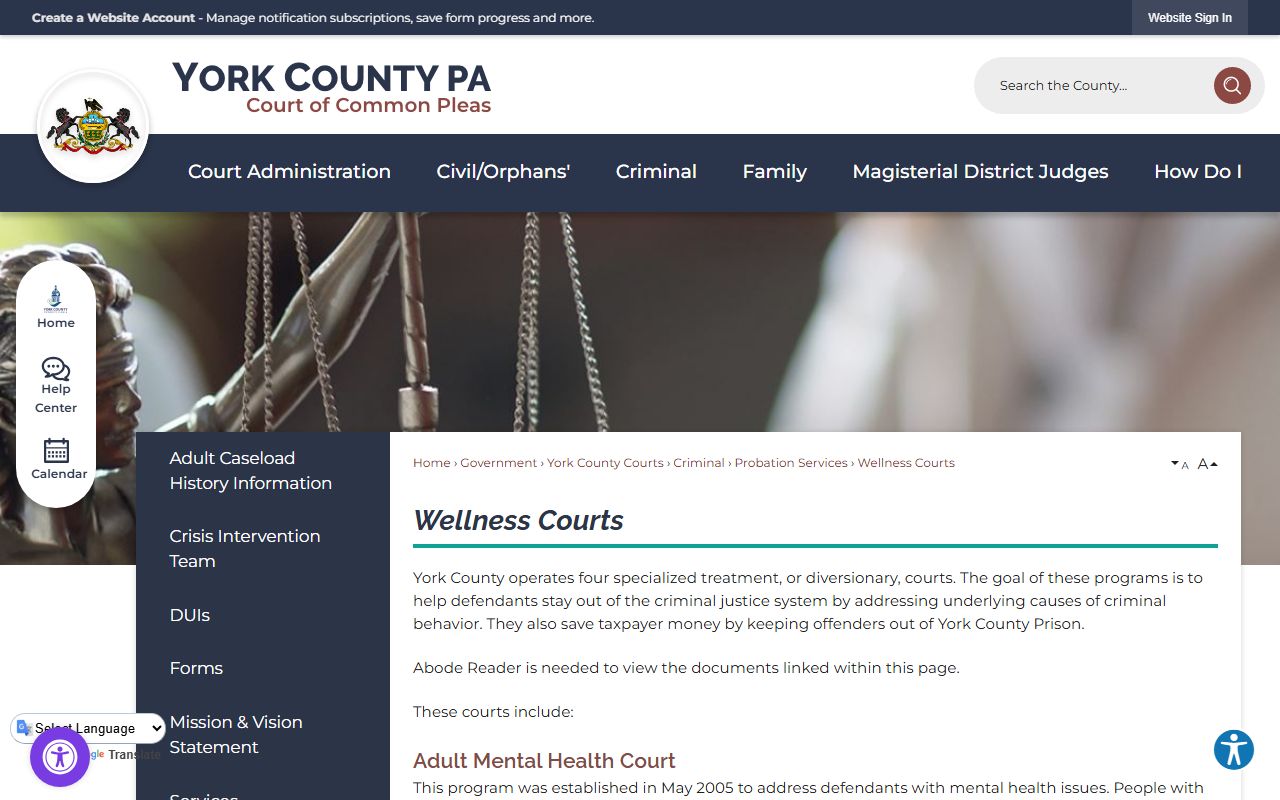
Specialty-court participation does not erase the need to read the full docket, disposition, and sentence terms for the case.